Automobile Warning Lights

April 17, 2014

Warning Lights That Signal Car Repair


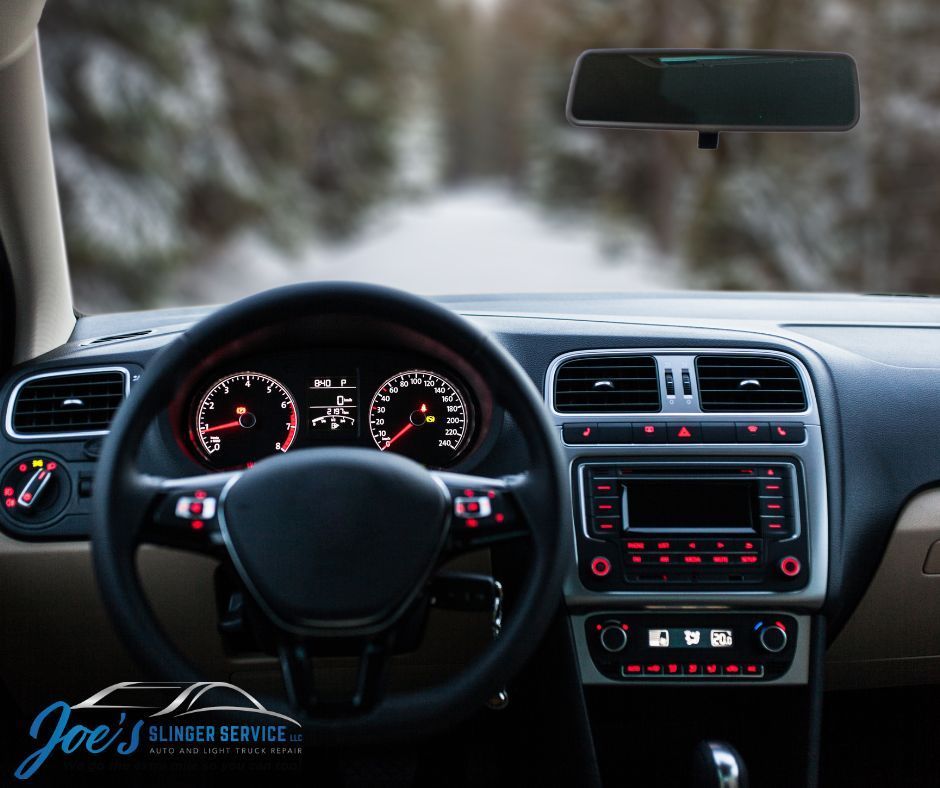
Do you know what each and every one of the warning lights on your car’s dashboard represents? Probably not, but there are a few warning lights that every driver should know, if only because they cannot be ignored (regardless if you’re a regular commuter or you only use your automobile for short trips).


The warning indicators on your dashboard are there for a reason, and most illuminate in different ways to signal different situations. For instance, when you start your car, all of the lights on your dashboard will typically flash, letting you know that each of your vehicle’s systems is in working order. If, however, one illuminates while you’re driving or after this start-up sequence, it could indicate that your car needs repair, and quick.


Here’s a run-down of the most important lights on your dashboard.


Oil Pressure Light

This light may actually be one of the most important lights on your dashboard. Often showing a little oilcan or the word “OIL,” the oil pressure light illuminates when your vehicle experiences a drop in oil pressure.


Because it is vital that your engine be well-lubricated during operation, you should never drive your vehicle if this light is on. If it turns on and stays on while you are driving, pull off the road at the first safe opportunity, turn off your engine, and call someone for assistance. Driving your car while the oil pressure light is on can cause serious, irreparable damage to your engine.


Engine Temperature Light

Another important warning indicator, the engine temperature light is often a thermometer icon or the word “TEMP.” This dashboard light illuminates when the temperature of your engine exceeds safe levels and, unless it is quickly brought into “the safe zone,” can damage your engine.


An illuminated engine temperature light could indicate a coolant leak, a faulty temperature sensor, or another serious issue. If the engine temperature indicator turns on and stays on while you are driving, you should try not to drive your vehicle. Instead, pull off the road at the first safe opportunity, shut off your engine, and call for help.


If your engine is steaming, be extremely careful if you try to open your hood. And do not, under any circumstances, try to remove your radiator cap while the engine is hot.


Charging System Light

Typically a battery symbol, the word “GEN” or the word “ALT,” the charging system light lets you know when there is a problem with your vehicle’s electrical system (specifically, that your electrical system is not getting power from the alternator).

If this light comes on, turn off any unnecessary electrical drains (like your radio, heater, air conditioner, or iPod charger) and drive your vehicle to a car repair shop as soon as you can. Be aware that if you park your car, you may not be able to start it again without a “jump.”


Check Engine Light

The Check Engine Light is another helpful dashboard indicator that lets you know that you should have your car checked out by a service professional. Typically, this light (which is often an engine icon and/or the words “CHECK” or “CHECK ENGINE”) lets you know when there is something wrong with your vehicle’s exhaust system.


This light can stay on or flash, depending on the type of problem that your vehicle’s sensors are sensing. If the light stays on, make an appointment with a car repair shop as soon as is convenient. If the light flashes, this could indicate a more serious problem, so it’s best to make an appointment (or emergency repair visit) immediately.


Other Dashboard Indicators

The warning lights listed above aren’t the only dashboard lights that can indicate your car needs to be serviced, but they are the most important. Depending on the type and year of your vehicle, you may also see any of the following dashboard indicators:

  • Brake System Light
  • Battery Charge Warning Light
  • Low Coolant Level Warning Light
  • IMA Light (for Integrated Motor Assist)


Disregarding the warning lights on your vehicle can cause serious, costly damage. It can also endanger the safety of anyone in the vehicle (and other cars on the road). If your warning indicators light up or act in a way that seems unusual, be sure to call a qualified auto repair service technician or repair shop to make sure that your vehicle is still safe to drive.

February 11, 2026
Most Slinger drivers are aware that manufacturers have service intervals for your car . The engineers that design our vehicles have tested the various systems and components to meet durability and safety standards. Some of these standards are self-imposed and others, like those for emissions components, are government mandated. The maintenance schedules are designed to achieve the standards. Think of the benefits of following recommended intervals as falling into three general categories: Protection, Efficiency and Safety.  Protection . Let’s start with motor oil. First of all, the engineers recommend a particular weight and type of motor oil. All of their oil change recommendations assume using the proper motor oil. Motor oil contains detergents and other additives that clean the engine and provide corrosion resistance. Over time, the additives are depleted. The oil also becomes contaminated by water, dirt and combustion gases. Extending your interval beyond the recommendation means that your engine will be operating without the full protection of fresh motor oil. It also means that sludge can form in contaminated oil and clog up passages in the engine, starving parts from needed lubrication. Efficiency . Some Slinger services are designed to keep automotive systems operating efficiently. For example, the fuel system gets clogged up with gum and varnish from the fuel. Fuel doesn’t flow efficiently which reduces fuel economy. A fuel system cleaning restores the fuel system’s efficiency and increases your gas mileage. Safety . Your brakes are obviously one of the most important safety systems on your vehicle. The has scheduled brake pad replacement as well as power brake fluid drain and replacement intervals. Because brakes are so important, a brake inspection is also on the schedule to head off problems before they result in an accident. Check your owner’s manual for recommended service schedules or talk with your friendly and knowledgeable Joe’s Slinger Service . You may be surprised to learn that various inspections may be on your list of factory recommendations. These inspections are usually at major intervals like 24,000 miles or 40,000 kilometers. They’re designed to uncover important parts that may be close to failing. Your owner’s manual can tell you when to change your oil, but it can’t tell you that you have a radiator hose that’s bulging and about to burst. For that you need a technician. These scheduled inspections are in addition to the multi-point inspections done with a full-service oil change at Joe’s Slinger Service.
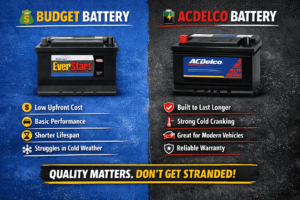
Comparison of Budget (EverStart) and ACDelco car batteries, highlighting features. Blue and black background. | Joe's Slinger Service
January 22, 2026
When your car won’t start, the battery suddenly becomes the most important part of your vehicle. And when it’s time to replace it, many drivers are faced with a choice: grab the cheapest battery available or invest in one built for long-term reliability. At first glance, a budget battery from a big-box store like Walmart may seem like the obvious choice. But there’s more to the story than upfront cost. The Truth About Budget Batteries Budget batteries are designed to do one thing: start your car at the lowest possible price . For some drivers, that’s enough. These batteries are generally best for: Older vehicles with minimal electronics Light, short-trip driving Drivers who don’t mind replacing a battery more frequently While they can work, they often have: Shorter overall lifespan Less consistent cold-weather performance Limited reserve capacity for accessories and electronics That’s why many budget batteries fail sooner—especially in extreme temperatures or vehicles with modern electrical demands. Why We Choose ACDelco Batteries Today’s vehicles rely on far more than just a starter motor. From infotainment systems and safety features to remote start and stop-start technology, modern cars demand strong, consistent power . ACDelco batteries are built with higher-quality internal components designed to: Deliver stronger cold-cranking performance Handle higher electrical loads Last longer under real-world driving conditions Provide dependable warranty coverage In short, they’re engineered for reliability , not just price. Cost vs. Value: What Really Saves You Money? A lower-priced battery may save money today—but if it needs to be replaced sooner, struggles in winter, or leaves you stranded, that “deal” quickly disappears. A quality battery: Reduces the risk of no-start situations Lasts longer, meaning fewer replacements Performs better year-round Gives peace of mind every time you turn the key That’s why we don’t recommend batteries based on price alone. We recommend them based on what keeps our customers driving with fewer problems . Our Recommendation If your vehicle has modern electronics, sees extreme temperatures, or you simply want fewer battery issues, an ACDelco battery is the smarter long-term choice . We install batteries we trust—because your vehicle’s reliability matters to us. If you’re unsure which battery is right for your vehicle, stop by or give us a call. We’re happy to help you choose the option that fits your driving needs and keeps you on the road.
Mechanic using a tablet while examining a blue SUV with the hood open in a garage. | Joe's Slinger Service
January 20, 2026
Preventive Maintenance Can Save You Thousands Most people think car problems come out of nowhere—but the truth is, many major repairs start as small, preventable issues. The one thing we wish every customer knew? Preventive maintenance matters more than fixing breakdowns. Small Problems Rarely Stay Small That tiny oil leak. That squeak when you brake. That warning light you’ve been ignoring because the car still “drives fine.” These are your vehicle’s early warning signs. Catching issues early usually means: Less expensive repairs Fewer breakdowns A safer, more reliable vehicle Longer vehicle life Waiting often turns a simple fix into a costly repair. Your Car Doesn’t Break Overnight Most major failures—engine damage, transmission problems, brake failure—happen because something small was overlooked over time. Regular inspections, oil changes, tire rotations, and fluid checks allow mechanics to spot issues before they become emergencies. Preventive Maintenance = Peace of Mind Staying on top of maintenance helps you: Avoid surprise repair bills Reduce stress Improve fuel efficiency Keep your family safe on the road At Joe’s Slinger Service , we believe honest communication and routine maintenance are the best tools for keeping your vehicle running its best. The Bottom Line If there’s one thing we wish every driver understood, it’s this: Preventive maintenance is always cheaper than reactive repairs. Your car talks to you—you just need someone who knows how to listen.
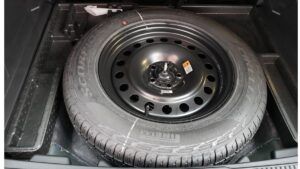
Spare tire inside a car trunk. Black wheel with tire, set in a compartment. | Joe's Slinger Service
January 12, 2026
Most of us grow up assuming one thing about cars: if you get a flat tire, there’s a spare in the trunk. Simple, right? Not anymore. More and more new vehicles — even brand-new models — are being sold without a spare tire . Instead, drivers may find a tire inflator kit, sealant, or sometimes nothing at all. It’s something many people don’t discover until they’re already stuck on the side of the road. Why Are Spare Tires Disappearing? Car manufacturers are removing spare tires for a few reasons: Weight reduction to improve fuel efficiency Lower production costs More trunk space While those changes benefit manufacturers, they don’t always help drivers when a tire goes flat unexpectedly. The Problem With Fix-A-Flat Kits Many cars now come with tire sealant kits instead of spares. These can work for small punctures , but: They won’t fix sidewall damage They don’t help with blowouts They often make tires unrepairable afterward In cold weather or rural areas, relying on a sealant can leave you stranded. What You Should Do Today Take five minutes to check your vehicle: Look under the trunk floor Read your owner’s manual See if you have a spare, donut, or only a repair kit If your vehicle doesn’t have a spare, consider: Purchasing a compact spare Carrying a roadside assistance membership Keeping emergency supplies in your car Bottom Line A flat tire is stressful enough. Finding out you don’t have a spare makes it worse. Knowing what your vehicle does — or doesn’t — come with can save you time, money, and a lot of frustration when you need help the most.
December 10, 2025
If there’s one thing Wisconsin folks know well, it’s winter. Between the cold snaps, the surprise snow dumps, and those mornings when your car sounds as tired as you feel, it’s no wonder people ask us if gas can actually freeze in the tank when levels get low. Here’s the honest answer:
October 24, 2025
Buying a used car is a big decision. You want to make sure you’re getting a good deal — not someone else’s problem. At Joe’s Slinger Service, we understand how stressful it can be to shop for a vehicle that’s already seen some miles. That’s why we offer an affordable way
October 21, 2025
At Joe’s Slinger Service, we take pride in keeping your vehicle running strong — and that includes your transmission. It’s one of the hardest working systems in your car, and it needs clean, healthy fluid to do its job. Over time, transmission fluid breaks down. Heat, friction, and debris slowly
September 30, 2025
If you’re buying a car or your factory warranty is about to expire, you’ve probably been offered an extended warranty. It sounds good—extra protection, less worry—but is it really worth the cost? At Joe’s Slinger Service, we’ve worked with all kinds of warranties and seen the good and the not-so-good.
September 13, 2025
Where should I get new tires Joe's Slinger Service Slinger WI Nowadays you can buy tires absolutely anywhere at all different prices. How do you know where to purchase them from and what you need? Buying tires from the repair shop you use to do your vehicle’s maintenance
August 8, 2025
How to Tell if Your U-Joint Is Failing – Signs Every Driver Should Know Your vehicle’s drivetrain depends on many moving parts to keep power flowing smoothly from the engine to the wheels. One small but critical part is the U-joint (universal joint). This joint allows your driveshaft to flex